Startup Coalition has opened applications for Pitch in Parliament: AI in HealthTech, giving UK startups the chance to pitch NHS-focused AI solutions to investors and policymakers in Westminster.
Category: AI
Artificial intelligence coverage with the Business Matters filter: not the hype cycle, but what AI adoption actually looks like inside UK firms – the tools, the costs, the failures, and the regulation heading down the track.
AI set to ‘turbocharge’ Britain’s road and rail network, says Transport Select Committee chair
Government investment in AI and digital technology will transform Britain’s road and rail network, improve reliability and support economic growth, MPs say.
Karavel raises £1.25m pre-seed round to modernise compliance in regulated industries
AI compliance platform Karavel has secured £1.25m in pre-seed funding led by Fuel Ventures to streamline regulatory monitoring, ad reviews and compliance workflows.
Google parent joins $4 trillion club after Apple selects its AI technology
Alphabet joins the $4 trillion club after Apple confirms it will integrate Google’s Gemini AI into Siri and other products, boosting Google’s AI ambitions.
Former Trump adviser Dina Powell McCormick joins Meta in senior AI strategy role
Meta has named former Trump adviser Dina Powell McCormick as president and vice chairman to drive AI strategy and infrastructure funding.
Liz Kendall warns xAI over Grok images as UK moves to criminalise non-consensual AI deepfakes
The Technology Secretary warns xAI could be blocked in the UK as new laws target AI-generated intimate images without consent.
Ofcom demands answers from X over claims Grok AI generates sexualised images of children
Ofcom has contacted X and xAI after reports Grok AI generates sexualised images of children and non-consensual deepfakes.
The AI tool that could save the NHS £300m a year by cutting missed appointments
Health-tech firm DrDoctor says its AI system can cut missed NHS appointments by 30%, potentially saving £300m a year and treating thousands more patients.
A third of UK businesses plan AI investment in 2026 as confidence ticks up
A third of UK businesses plan to invest in AI in 2026, according to Lloyds’ Business Barometer, as firms prioritise productivity, skills and technology to drive growth.
UK electricity demand rises for second year running as EVs, heat pumps and AI drive surge
UK electricity demand has risen for a second consecutive year for the first time since 2003, driven by electric vehicles, heat pumps and AI data centres, according to new analysis.
AI helps hospitals tackle A&E bottlenecks as NHS rolls out demand-forecasting technology
Hospitals across England are using AI to predict A&E demand, helping reduce waiting times and ease pressure on NHS staff as part of the government’s AI Exemplars programme.
AI likely to displace jobs in a modern Industrial Revolution, warns Bank of England governor
Andrew Bailey warns AI is likely to displace jobs in a way similar to the Industrial Revolution, urging urgent investment in skills, training and education.
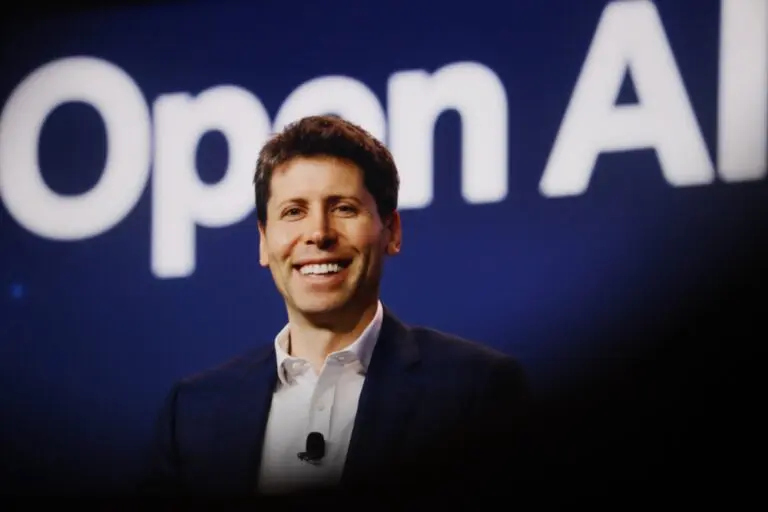
Amazon in talks over $10bn investment in OpenAI as AI arms race accelerates
Amazon is reportedly in talks to invest up to $10bn in OpenAI, potentially valuing the ChatGPT maker at more than $500bn and deepening its AI partnership.
OpenAI hires George Osborne to lead global Stargate initiative
OpenAI has appointed former chancellor George Osborne to lead its OpenAI for Countries initiative, expanding its Stargate programme to promote democratic AI worldwide.
McKinsey plans thousands of job cuts as AI reshapes consulting workforce
McKinsey to make thousands of layoffs as AI advances
Global consultancy firm takes its own advice and sets out to cut one in ten roles in some teams in response to improvements in artificial intelligence
McKinsey, the consultancy that regularly advises companies on cutting costs, is taking its own advice and drawing up plans that could result in it shedding thousands more jobs over the next couple of years in response to “rapid advances in artificial intelligence”.
Senior partners at the global management consulting firm, which has been steadily cutting its worldwide workforce over the past few years, are understood to have held initial talks with the heads of non-client-facing departments about shrinking their teams by as much as 10 per cent.
A McKinsey spokesman would not confirm how many roles were at risk, but Bloomberg, which first reported the plans, estimated that there could be “a few thousand” layoffs staggered over the next 18 to 24 months.
“As our firm marks its 100th year, we’re operating in a moment shaped by rapid advances in AI that are transforming business and society,” the spokesman said. “Just as we’re partnering with clients to strengthen their organisations, we’re on our own journey to improve the effectiveness and efficiency of our support functions.”
McKinsey is one of the world’s foremost consulting firms, advising companies on everything from implementing new technologies to entering new markets and cutting costs. It counts among them blue-chip companies including Coca-Cola, Microsoft, Goldman Sachs and numerous governments.
Getting rid of jobs is often the go-to method McKinsey and its consulting rivals use when trying to “trim the fat” from clients’ cost bases. McKinsey went on an intense hiring spree between 2012 and 2022, during which time its worldwide headcount increased from 17,000 to 45,000. It has since fallen back to about 40,000 after an earlier round of layoffs in 2023. About half of its staff are in non-client-facing, or back-office, roles.
Bob Sternfels, the firm’s global managing partner, laid the groundwork for further job cuts in a television interview in September, when he acknowledged that McKinsey would “probably have fewer folks in the non-client-deployed areas” of the business in the future.
“We’re continuing to add folks who are client-deployed and we see an ever-increasing need for that and we’re aggressively in the market right now trying to expand that,” Sternfels, 55, said. “But we are rethinking our centre-based operations by leveraging all of this new technology.”
Others have come to the same conclusion about how new technologies change the need for human workers, particularly in back-office roles. Marc Benioff, the boss of Salesforce, the software maker, said in August it had cut 4,000 of its customer support roles because “I need less heads”, while Klarna, the buy-now, pay-later company, effectively halved its workforce and replaced them with AI.
At McKinsey, it is understood that discussions around shrinking its support teams are still at an early stage and no final decisions have been made about the size of the cull or which countries will be most affected. McKinsey employs 2,000 people in the UK, some of whom will be considered “non-client-facing”.
The need to streamline operations reflects improvements in technology but is also partly in response to an industry-wide slowdown in client demand for advice over the past couple of years. Companies, wary of the geopolitical and economic uncertainty, have reined in their spending on consultants, having invested heavily immediately after the pandemic.
McKinsey is planning to cut thousands of roles over the next two years as advances in artificial intelligence reduce the need for back-office staff, reports suggest.