


According to forecasts, the indoor positioning systems market will continue to expand and by 2030 is projected to reach $92.36 billion in volume with an average annual growth rate of 32.56%. The reason for this success lies in the wide opportunities for optimizing business processes. An indoor navigation system for museums, malls, and other high-traffic areas allows companies to improve their service quality and increase customer satisfaction.
What is indoor navigation system?
Many facilities occupy large spaces, consisting of many floors and hallways. Not everyone can easily navigate them and quickly find the necessary objects. To simplify the search and help visitors quickly reach the point of interest, an indoor navigation system can be introduced into the infrastructure. It doesn’t require high costs and works based on real-time location.
Indoor navigation solutions are based on a set of equipment and modern software tools. Special beacons or tags are installed in different areas of the building. They send out radio signals at certain intervals. The pulses from sensors are received by reading devices and sent to the server for further processing to determine the location of an object.
In most cases, Bluetooth® Low Energy or Wi-Fi technologies are used to implement the platform. Indoor navigation allows you to solve a wide range of tasks based on geodata and provides companies with many benefits, such as:
- optimizing space due to advanced user analytics;
- improving the quality of customer service;
- increasing customer loyalty and improving the experience of visitors due to convenient navigation through the building;
- ensuring the safety of visitors and staff;
- acquiring an additional communication channel for organizing effective marketing campaigns.
How introducing indoor navigation improves business processes and customer experience
Indoor navigation is a versatile tool for optimizing space. It can be successfully used for healthcare, museums, offices, stores and malls, college campuses, and transport hubs.
Museums
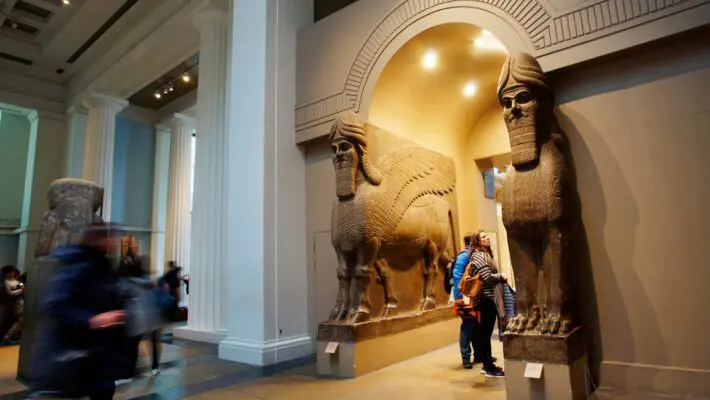
The scale of many museums makes it difficult to find certain exhibits and hinders the overall experience. People often have to study signs and maps for a long time and look for information on objects, which negatively affects the visitor experience. An indoor navigation system helps in finding exhibits and makes visiting the museum more pleasant and comfortable.
Possibilities include:
- creating a digital map with the location of each exhibit;
- building short routes through the museum to places of interest;
- a smart guide in a mobile application;
- providing information about expositions, events, and services.
Implementation benefits include:
- improving user experience;
- optimizing the space taking into account the preferences of visitors;
- positioning the museum as an advanced and modern institution.
Airports and railway stations
The main difficulties at transport hubs are associated with large crowds of people and the inconvenient search for suitable objects. Each day, there’s significant traffic through the terminals. People are concentrated in the baggage claim areas, near the cash registers, and information desks. Airport indoor navigation and navigation for a railway station allow you to optimize movement and improve the quality of passenger service.
Possibilities include:
- building digital maps that display crucial spots (cash offices, shops, bathrooms, cafeterias, etc.);
- creating routes for passengers;
- sending push notifications containing schedules, ads, and other valuable content;
- collecting data about passengers, developing flow maps, and heat maps.
Implementation benefits include:
- increasing visitor loyalty by reducing stressful situations when searching for objects;
- getting detailed traffic analysis to optimize flows;
- improving passenger safety by improving indoor logistics.
Healthcare facilities
Modern indoor navigation helps patients and staff navigate medical facilities. The system successfully solves the problems associated with moving around hospitals and allows patients to avoid unnecessary stress.
Possibilities include:
- building maps of the hospital with rooms, doctor’s offices, wards, and bathrooms;
- developing routes in a mobile app;
- sending personalized notifications to patients.
Implementation benefits include:
- improving staff efficiency;
- enforcing social distance.
Colleges
Indoor navigation solutions are probably most needed in large colleges with many campuses and buildings. Moving through them can cause difficulties even for staff, so implementing this type of system makes life easier for both teachers and students.
Possibilities include:
- building convenient routes to classrooms and offices;
- turn-by-turn navigation in real-time cases;
- collecting data to optimize the work of the institution.
Implementation benefits include:
- fostering the reputation of a “smart” university;
- improving the experience for visitors and students.
Offices
Indoor navigation simplifies the interaction between office employees and makes it easier for visitors to find the right rooms. Thanks to it, you can increase the efficiency of working time, and eliminate the delay of meetings, conferences, and other events.
Possibilities include:
- building routes to meeting rooms, conference rooms, and offices;
- sending location-based notifications;
- collecting movement data for route optimization.
Implementation benefits include:
- increased labor productivity;
- optimizing working time;
- positioning the office in question as a modern business space.
Malls and retail
Indoor shopping mall navigation is an opportunity to change the way visitors perceive shopping. After it’s implemented, customers can forget about the tedious search for the right stores and get a handy mobile app that helps them find any products they might need.
Possibilities include:
- building mall maps indicating the location of shops and boutiques;
- building routes to hallways, departments, or specific products;
- providing visitors with information about products, promotions, and sales;
- using advanced analytics of customer behavior to create personalized offers.
Implementation benefits include:
- reducing the shoppers’ stress;
- obtaining an additional advertising channel;
- optimizing customer flows;
- increasing customer loyalty to a particular store.
To sum up, indoor navigation is widely used in many industries. With this technology, it’s possible to eliminate the visitors’ frustration from wandering around the facility and increase overall customer satisfaction.