


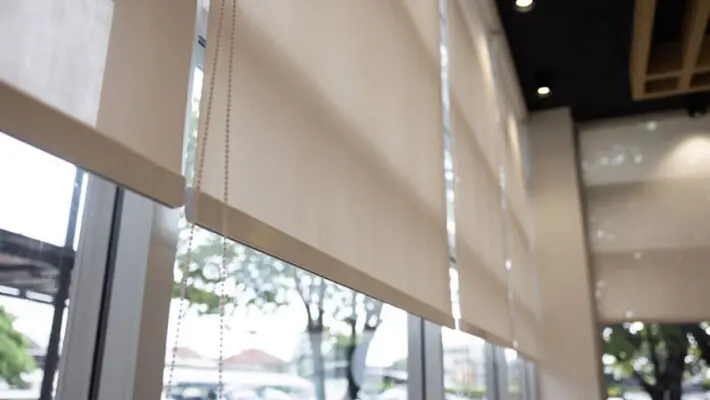
Each space has different needs for light, privacy, and how the room is actually used throughout the day. Most people focus on color and price, then realize months later that the blind lets in too much light, fades badly in direct sun, or doesn’t offer the privacy they expected. Knowing how to choose the right roller blind fabric for bedrooms versus living areas means thinking about function first—then aesthetics. Get the balance right, and your blinds will work hard for years. Get it wrong, and you’ll be replacing them far sooner than you’d planned.
What Bedroom Roller Blind Fabrics Need to Deliver
Another factor to consider is the type of fabric and whether it suits the requirements of the space. For projects where fire performance is part of the specification, Direct Fabrics’ flame-retardant roller blinds are one example of blinds made with fabrics intended to meet relevant fire-safety requirements. This can be particularly important in commercial, hospitality, education, and other settings where window coverings may need to satisfy both practical and safety standards. Other suppliers, including Hillarys, Blinds2go, and Swift Direct Blinds, also offer roller blinds in a range of fabrics, finishes, and levels of light control. Considering how the fabric will perform over time, including cleaning, durability, and resistance to fading, can also help narrow down the right option for the space.
Blackout vs. Dim-Out: Understanding the Difference
Blackout and dim-out are the two fabric categories most relevant to bedroom roller blinds, but they don’t perform identically. A true blackout fabric contains an opaque coating, usually applied to the reverse of the blind, that stops virtually all light from passing through the weave itself. Dim-out fabrics reduce light significantly but allow some to filter through, which suits people who’d rather wake naturally with the light than sleep in complete darkness. Here’s the thing: the label “blackout” isn’t consistent across suppliers, so it’s worth asking for a fabric specification that confirms the light-reduction percentage rather than taking the category name at face value. Side channels and pelmets make a real difference too; even a genuine blackout fabric will leak light around the edges of a standard roller blind unless the window recess is fitted with channels that create a proper seal. If total darkness is the goal, that system matters as much as the fabric itself.
What Living Room Roller Blind Fabrics Need to Deliver
Living areas run on a completely different set of priorities. What you’re after is daylight control rather than daylight elimination: the ability to soften harsh afternoon sun, cut glare on screens, and maintain some privacy from the street without shutting the room off entirely. Most people spend time in a living room during daylight hours, so the blind needs to work well in its partially drawn or fully raised position as much as it does when it’s all the way down. Durability against UV exposure becomes more pressing here; south-facing living rooms take intense direct sunlight for extended periods, and fabrics with poor UV resistance will fade. Some coatings crack or discolor over time, too. Texture and pattern also carry more visual weight in a living room than in a bedroom, since the blind forms part of the room’s decorative scheme rather than sitting quietly in the background.
Screen and Solar Fabrics for Living Room Use
Screen fabrics, sometimes called solar fabrics, are a popular choice for living rooms because they manage glare without eliminating the view. They’re woven with small apertures, and the openness factor describes how much of the fabric’s surface is open weave. A 1% openness factor gives good privacy and strong solar control but cuts the view significantly. A 10% factor preserves the view and feels lighter but offers less protection from heat and UV. For most living rooms, somewhere between 3% and 5% openness strikes the right balance. Screen fabrics also help regulate temperature by reflecting solar heat before it enters the room, which can trim cooling costs during warm months; the trade-off is that they offer limited privacy at night when internal lights are on. So pairing them with an extra layer or a room-darkening roller blind on a double bracket solves that headache without compromising the daytime look.
Conclusion
Choosing the right roller blind fabric comes down to matching the room’s use to what the fabric is actually built to do. Bedrooms call for high light reduction, solid privacy, and easy maintenance. Blackout or dim-out fabrics with wipe-clean finishes are usually the right starting point. Living areas need more nuance: a fabric that manages solar gain and glare without cutting off natural light and one that holds its appearance through years of direct sun exposure. It’s also worth thinking about how to choose the right roller blind fabric for bedrooms versus living areas across a whole property rather than room by room, since consistent fabric quality and finish create a coherent look from the street outside. Test fabric samples in the actual room before you commit. What looks right in a showroom or on a screen can look very different against your walls and in your specific light conditions.