


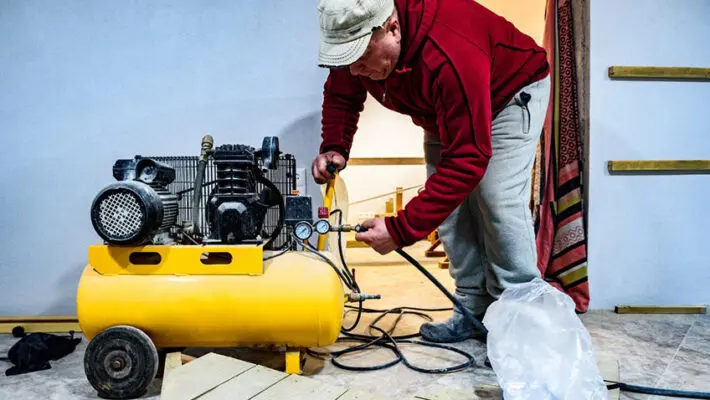
An undersized compressor can lead to pressure drops, slower cycling, inconsistent fastening and unnecessary wear on both the compressor and the tool, while an oversized model may increase purchase costs and energy consumption without providing any practical benefit.
Many buyers focus primarily on motor horsepower or tank capacity when comparing compressors. Although these specifications are important, they represent only part of the overall picture. Air pressure (PSI), airflow (CFM), duty cycle, receiver size and the intended application all play a significant role in determining whether a compressor can meet the demands of a particular pneumatic tool. Understanding how these factors work together makes it much easier to choose equipment that delivers reliable performance for both occasional and continuous use.
At ProNailers, we supply a wide range of air compressors, pneumatic fastening tools and compatible pneumatic components from leading manufacturers, helping customers select equipment that delivers reliable performance across a variety of fastening applications. Whether you need a compact compressor for installation work or a higher-capacity model for demanding site or workshop use, choosing compatible equipment is essential for achieving consistent results.
Why Matching the Compressor to the Tool Matters
A pneumatic tool can only perform as well as the air supply behind it. Even a high-quality nailer or stapler will struggle to operate correctly if the compressor cannot deliver sufficient airflow or maintain consistent pressure. Matching the compressor to the tool ensures reliable cycling, consistent fastening depth and efficient operation throughout the working day.
Insufficient airflow is one of the most common causes of poor pneumatic tool performance. When the compressor cannot supply enough compressed air, pressure begins to drop during continuous use. This may result in reduced driving power, slower cycling, incomplete fastener seating or the need to pause while the compressor refills the receiver. These interruptions become increasingly noticeable during high-volume applications such as framing, roofing or flooring installation.
Selecting a compressor with significantly greater capacity than required is not always the most practical solution. Larger compressors generally cost more to purchase, occupy more workshop space and may consume more electricity or fuel during operation. For users running lightweight pneumatic tools or carrying out occasional fastening work, the additional capacity often provides little measurable benefit.
Incorrect compressor selection also has a direct impact on productivity and operating costs. An undersized compressor forces operators to wait while pressure recovers, whereas an unnecessarily large unit increases purchase, maintenance and energy costs without improving efficiency. Matching compressor performance to the intended workload helps maximise productivity while reducing unnecessary expenditure. It also reduces wear on both the compressor and the pneumatic tool by maintaining a more stable air supply throughout normal operation.
Understanding the Key Air Compressor Specifications
Air Pressure (PSI / Bar)
Working pressure refers to the force at which compressed air is delivered to the pneumatic tool and is usually expressed in pounds per square inch (PSI) or bar. Every pneumatic tool is designed to operate within a specified pressure range, and supplying either too little or too much pressure can affect fastening quality, operating reliability and component life.
The compressor should be capable of maintaining the required operating pressure throughout normal use rather than reaching it only when the receiver is fully charged. If pressure continually falls during operation, the tool may cycle more slowly, drive fasteners inconsistently or fail to achieve the required driving depth. Stable pressure is therefore more important than simply selecting a compressor with the highest maximum pressure rating.
Airflow (CFM)
Airflow, measured in Cubic Feet per Minute (CFM), indicates the volume of compressed air that a compressor can continuously supply. While pressure determines the force of the air, CFM determines whether enough air is available to keep the pneumatic tool operating without interruption.
For most pneumatic tools, CFM is the specification that ultimately determines compatibility. Two compressors may produce the same working pressure, but if one delivers insufficient airflow, it will struggle to support continuous operation. This is why manufacturers specify both pressure and airflow requirements for their equipment.
As a general rule, the compressor should provide some additional airflow beyond the tool’s minimum requirement. Maintaining this reserve offers several advantages:
- It helps compensate for pressure losses within hoses and fittings.
- It allows the compressor to cope with short periods of increased air demand.
- It reduces the likelihood of continuous maximum-load operation.
- It provides flexibility if additional pneumatic tools are introduced in the future.
Tank Capacity
Tank capacity refers to the volume of compressed air stored inside the receiver and is typically measured in litres. The receiver acts as a reserve, allowing the compressor to supply compressed air more consistently during periods of increased demand.
A larger receiver generally allows longer periods of uninterrupted tool operation before the compressor restarts. It also reduces how frequently the motor cycles on and off, which may lower mechanical wear and help maintain more stable operating pressure during intermittent high-demand applications.
However, receiver size should never be viewed as a substitute for compressor output. A large tank cannot compensate for insufficient airflow. If the compressor pump cannot generate compressed air quickly enough to match the tool’s consumption, the receiver will eventually empty regardless of its size, resulting in pressure loss and reduced tool performance.
Duty Cycle
Duty cycle describes the proportion of time a compressor is designed to operate within a given period without overheating or experiencing excessive wear. For example, a compressor with a 50% duty cycle is generally intended to spend approximately half of its operating time running and the remainder cooling.
This specification becomes increasingly important in high-demand environments where pneumatic tools are used continuously throughout the day. Applications such as timber framing, pallet production, manufacturing and workshop assembly often place sustained demands on the compressor. Selecting a model with an appropriate duty cycle helps maintain consistent airflow while reducing the risk of overheating, unnecessary downtime and premature component wear.
Matching Compressor Capacity to Different Pneumatic Tools
Different pneumatic tools consume compressed air at different rates, even when they operate at similar working pressures. Lightweight fastening tools generally require relatively little airflow, while equipment such as impact wrenches and spray guns demand substantially higher air volumes during continuous operation. The table below provides general guidance when comparing common pneumatic applications.
| Tool Type | Typical Pressure | Typical Air Consumption | Compressor Recommendation |
| Brad nailers | 70-100 PSI | 0.3-1.0 CFM | Small portable compressor with a 3-10 litre receiver |
| Finish nailers | 70-120 PSI | 0.5-1.5 CFM | Portable compressor with a 6-24 litre receiver |
| Framing nailers | 90-120 PSI | 2-4 CFM | Medium-capacity compressor with a 24-50 litre receiver |
| Roofing nailers | 90-120 PSI | 2-4 CFM | Medium-capacity compressor suitable for continuous site work |
| Flooring nailers | 90-120 PSI | 2-3 CFM | Medium-capacity compressor with stable pressure delivery |
| Pneumatic staplers | 70-110 PSI | 0.5-2 CFM | Small to medium compressor depending on staple size and application |
| Pin nailers | 60-100 PSI | 0.2-0.5 CFM | Compact portable compressor with a small receiver |
| Air impact wrench | 90 PSI | 4-6 CFM | High-output compressor with sufficient airflow reserve |
| Spray gun | 25-50 PSI (regulated) | 6-12 CFM | Compressor capable of delivering high continuous airflow with stable pressure regulation |
These figures should always be treated as general guidance rather than fixed requirements, as air consumption varies between manufacturers and individual tool models. Before selecting a compressor, check the pneumatic tool manufacturer’s recommended operating pressure and airflow, then choose a compressor that provides adequate performance with a sensible operating reserve rather than matching the minimum specification exactly.
Choosing Between Portable and Stationary Air Compressors
The best type of air compressor depends not only on the pneumatic tools being used but also on the working environment. Some applications require maximum portability and quick setup, while others benefit from higher output, larger air reserves and the ability to support continuous operation. Understanding the differences between portable and stationary compressors helps ensure the equipment matches both the workload and the workplace.
Portable Compressors
Portable air compressors are designed for mobility and convenience. Their compact size and lighter weight make them well suited to jobs where equipment needs to be transported frequently or moved around a site during the working day. Many models can be easily loaded into a van and carried by a single person, making them a practical choice for contractors working across multiple locations.
Portable compressors are particularly suitable for:
- Installation work, including doors, windows and interior joinery.
- Trim and finish carpentry using brad nailers, finish nailers and pin nailers.
- General construction and site work where mobility is important.
- Mobile contractors who require reliable compressed air away from a permanent workshop.
Although portable compressors are highly versatile, they generally have smaller receivers and lower continuous airflow than larger stationary models. They are therefore best suited to intermittent fastening applications rather than prolonged high-demand operation.
Stationary Compressors
Stationary air compressors are intended for permanent installation and are typically selected where compressed air is required throughout the working day. Larger receivers, higher airflow capacity and greater duty cycles make them more suitable for demanding environments where reliability and continuous operation are priorities.
Stationary compressors are often the preferred choice for:
- Workshops carrying out regular pneumatic tool operation.
- Manufacturing and assembly facilities.
- Continuous production environments with sustained air demand.
- Workplaces where several operators or multiple pneumatic tools are used simultaneously.
While stationary compressors require dedicated installation space and are less convenient to transport, they provide greater capacity for long-term professional use and can support more complex compressed air systems.
Electric vs Petrol Air Compressors
Power source is another important consideration when selecting an air compressor. Electric and petrol-powered models each offer distinct advantages depending on where and how they will be used. The most suitable option depends on access to mains electricity, portability requirements and the nature of the working environment.
| Feature | Electric Air Compressors | Petrol Air Compressors |
| Mobility | Limited by mains power supply | Excellent mobility for remote locations |
| Noise | Generally quieter during operation | Typically louder due to the engine |
| Maintenance | Lower maintenance requirements | Requires regular engine servicing and fuel management |
| Indoor/Outdoor Use | Suitable for indoor and outdoor use where power is available | Intended primarily for outdoor use because of engine exhaust emissions |
| Running Costs | Usually lower operating costs | Higher fuel and maintenance costs |
| Typical Applications | Workshops, factories, garages, interior installation work | Construction sites, agricultural work, remote projects and locations without electrical power |
For many workshop and installation applications, electric compressors provide an excellent balance of performance, operating cost and convenience. Petrol-powered compressors become particularly valuable when working on remote construction sites or in locations where access to mains electricity is unavailable.
How Many Pneumatic Tools Will You Use at the Same Time?
Many compressor sizing mistakes occur because buyers consider only the requirements of a single pneumatic tool. In practice, workshops and construction sites often operate multiple tools at the same time, significantly increasing the overall demand for compressed air.
The first step is to calculate the combined airflow requirement of every tool expected to operate simultaneously. If two framing nailers each require approximately 3 CFM, the compressor should be capable of supplying more than 6 CFM continuously rather than matching the combined requirement exactly. Maintaining a reasonable airflow reserve helps prevent pressure fluctuations during periods of peak demand.
Long air hoses and complex pipework should also be taken into account. As compressed air travels through longer air lines, small pressure losses naturally occur because of friction and restrictions within the system. These losses become more noticeable when hose diameters are too small, multiple quick couplings are used or several operators share the same air supply.
Where multiple users will be working from a single compressor, sufficient capacity becomes even more important. A compressor operating close to its maximum output may perform adequately for one operator but struggle once additional pneumatic tools are connected. Selecting equipment with adequate airflow reserve allows the system to maintain consistent pressure, reduce unnecessary compressor cycling and support future expansion if additional tools are introduced later.
Common Mistakes When Choosing an Air Compressor
Selecting an air compressor involves more than comparing price, tank size or motor output. Many purchasing mistakes result from focusing on a single specification while overlooking the overall air requirements of the pneumatic system. Understanding these common errors can help avoid performance issues, unnecessary costs and future equipment upgrades.
One of the most frequent mistakes is choosing a compressor based solely on receiver capacity. Although a larger tank can provide a longer reserve of compressed air, it cannot compensate for insufficient airflow. If the compressor pump cannot produce enough CFM, the receiver will eventually empty regardless of its size.
Another common mistake is ignoring the tool’s CFM requirement. Many users compare only the maximum pressure rating, assuming that matching the PSI specification is sufficient. In reality, inadequate airflow is often the primary reason pneumatic tools lose performance during continuous operation.
Duty cycle is another specification that is frequently overlooked. Compressors designed for occasional DIY use may not be suitable for high-demand fastening applications where tools operate for extended periods throughout the working day. Using a compressor beyond its intended duty cycle increases the risk of overheating and premature component wear.
Air distribution components can also create unnecessary restrictions. Undersized air hoses or fittings with limited internal diameter reduce airflow and increase pressure loss, preventing pneumatic tools from receiving the air supply they require even when the compressor itself is correctly specified.
Many buyers also select equipment without considering future requirements. Purchasing a compressor that only meets today’s workload may limit the ability to add additional pneumatic tools or accommodate increased production in the future. Allowing some additional capacity often provides greater long-term flexibility.
Finally, motor horsepower is often given too much importance. A higher horsepower rating does not automatically mean better compressor performance. Airflow, operating pressure, duty cycle and overall compressor design provide a much more accurate indication of how well a compressor will support pneumatic tools in real working conditions.
Additional Components That Affect Compressor Performance
The compressor is only one part of a complete compressed air system. Even a correctly sized compressor may struggle to deliver consistent performance if the supporting components restrict airflow or allow pressure losses within the system.
Air hoses should have sufficient internal diameter and appropriate length for the intended application. Excessively long or undersized hoses increase resistance, reducing airflow and causing pressure loss at the tool.
Air fittings also influence system efficiency. Poor-quality or restrictive couplings can limit airflow, while worn fittings may introduce air leaks that reduce overall performance and increase compressor running time.
Pressure regulators allow compressed air to be adjusted to the correct operating pressure for individual pneumatic tools. Proper regulation helps maintain consistent performance while avoiding unnecessary stress on equipment caused by excessive pressure.
Air filters remove dirt, dust and other contaminants before they reach the pneumatic tool. Cleaner compressed air reduces internal wear and helps maintain reliable operation over time.
Moisture traps separate condensed water from the compressed air supply. This is particularly important in humid environments or during prolonged compressor operation, as moisture can contribute to corrosion, seal deterioration and inconsistent tool performance.
Some pneumatic tools also require lubricators to introduce a controlled amount of oil into the compressed air supply. Where tool manufacturers recommend air line lubrication, correctly adjusted lubricators help reduce friction and prolong component life.
A well-designed compressed air system relies on all of these components working together. Even the best air compressor cannot deliver stable performance if airflow is restricted, pressure is poorly regulated or contamination enters the air supply before it reaches the pneumatic tool.
How to Select the Right Air Compressor for Fastening Applications
Choosing an air compressor becomes much simpler when the selection process follows a logical sequence. Rather than comparing compressors by a single specification, it is better to evaluate the complete requirements of the pneumatic tools and the working environment.
A practical approach is to work through the following steps:
- Check the tool specification. Review the manufacturer’s recommended operating pressure, airflow requirement and intended duty cycle for the pneumatic tool.
- Confirm the required operating pressure. Ensure the compressor can maintain the specified PSI throughout normal operation rather than only reaching it when the receiver is fully charged.
- Check the CFM consumption. Compare the compressor’s delivered airflow with the tool’s air consumption to confirm continuous compatibility.
- Add a safety margin. Select a compressor with additional airflow capacity to accommodate pressure losses, sustained operation and occasional increases in demand.
- Decide on portability. Consider whether the compressor will be used in a workshop, transported between job sites or operated in remote locations where petrol-powered equipment may be more practical.
- Consider future expansion. If additional pneumatic tools or extra operators may be added later, choosing a compressor with some spare capacity can reduce the need for future replacement.
- Select an appropriate tank capacity. Choose a receiver size that supports the expected working pattern while remembering that adequate compressor output remains more important than tank size alone.
Following this process helps ensure that the compressor matches both current and future fastening applications. For those comparing different compressor sizes, power sources and receiver capacities, the ProNailers air compressor collection provides a wide selection of models suitable for everything from lightweight installation work to demanding professional fastening applications.
Conclusion
There is no universal air compressor that suits every pneumatic tool or every working environment. The right choice depends on the specific requirements of the equipment being used, the expected workload and whether the compressor will support occasional installation work or continuous professional operation.
Rather than focusing on a single specification such as tank size or motor horsepower, it is important to evaluate the complete picture. A well-matched combination of operating pressure (PSI), airflow (CFM), duty cycle and tank capacity provides stable air delivery, consistent tool performance and reduced wear on both the compressor and the pneumatic equipment over the long term.
Whether you are selecting a compact portable unit for trim installation or a higher-capacity compressor for demanding fastening applications, choosing equipment that matches your pneumatic tools will improve productivity and help avoid unnecessary operating costs. ProNailers offers a wide range of air compressors, pneumatic tools, components and accessories from leading manufacturers, making it easier to build a compressed air system that delivers reliable performance for both workshop and on-site applications.