

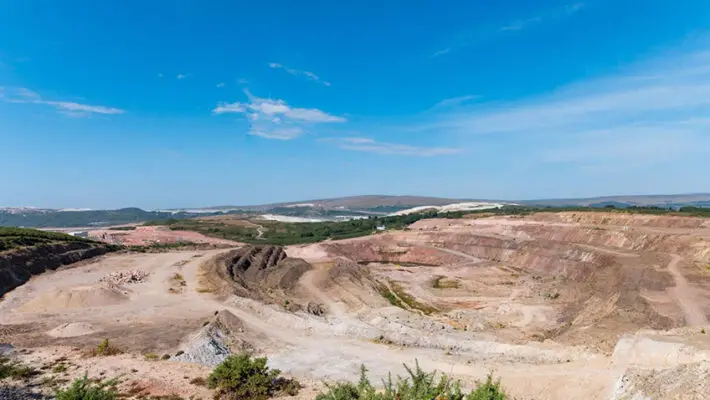
The fund will make an equity investment of £36 million in Tungsten West, the Aim-listed business based in Plymouth, in exchange for a 7 per cent stake, alongside £25 million in debt. The company will also have the option to draw on a further uncommitted facility of £10 million, according to the investment announcement published by the National Wealth Fund on Tuesday.
The money will go towards repaying a $25 million (£18.5 million) bridge loan provided by Gregory Coffey, a major shareholder in the company, and towards ramping the Hemerdon mine in south Devon up to full production capacity by the first quarter of next year.
In exchange, the government will have the option to purchase 50 per cent of the tungsten produced at Hemerdon, together with the right to appoint a non-executive director to the board and a board observer. The fund expects the restart to support around 350 direct jobs.
From £40,000 in the bank to a state-backed restart
The scale of the reversal is stark. In December 2024 the company cautioned that there was “material uncertainty” over its ability to continue operating after its cash reserves dwindled to £40,000. By the end of September last year they stood at just £1 million, while pre-tax losses for the six months to that date widened to £40.4 million, from £13.9 million a year earlier.
Jeff Court, Tungsten West’s chief executive, said the Hemerdon mine would “be a long-term creator of economic benefits for the south west, including the generation of a significant number of direct and indirect jobs”. Announcing the deal, he described the site as “a world class, low cost and long-life tungsten and tin resource in the UK”.
Oliver Holbourn, chief executive of the National Wealth Fund, said: “In Hemerdon, the UK has one of the largest deposits of tungsten in the world right on our doorstep.”
Why Whitehall wants tungsten
Hemerdon holds the largest deposit of tungsten in Europe, the company claims. The metal is used across a range of industries including aerospace and defence, where it goes into the production of helicopter blades, bullets and shrapnel heads.
Both tungsten and tin are on the UK’s list of critical minerals, metals where demand is rising and supply is judged to be at risk of shortage. The list formed part of the previous government’s effort to shore up supplies, and the designation now sits at the heart of the current government’s Vision 2035 critical minerals strategy, published in January, under which ministers have set a target of meeting a tenth of the UK’s critical mineral needs from domestic production by 2035. China controls up to 90 per cent of the supply of some critical minerals.
Jonathan Reynolds, the business secretary, said the investment was “a major vote of confidence in our critical minerals sector and another step forward in the prime minister’s plan to reindustrialise Britain”. In the fund’s announcement he added: “This is our Critical Minerals Strategy in action: doubling down on projects like Tungsten West’s.”
What it means for UK business
The most direct effect is regional. The fund puts direct employment from the restart at around 350 jobs, while Court points to further indirect work across the south west’s supply chain, from contractors to hauliers, if the ramp-up stays on schedule.
For manufacturers further afield, the significance is supply. Aerospace and defence firms that depend on tungsten currently buy into a global market in which China holds a commanding position, and a producing mine at Hemerdon would give UK buyers a domestic alternative. The government’s option over half the mine’s tungsten means the state would have first call on much of its output, a sign of how tightly defence demand is now shaping industrial policy.
The deal also extends a pattern of taxpayer money flowing directly into individual companies. The National Wealth Fund has committed to deploying up to £5 billion a year across ten priority sectors, while ministers recently made a £25 million investment intended to persuade AI firm Kraken Technologies to list in London. Business owners watching the state become shareholder, lender and customer at Hemerdon will draw their own conclusions about where industrial policy is heading.
None of it guarantees success. Tungsten West still has to turn a mine that nearly ran out of cash into a fully producing operation by the first quarter of next year, on the back of losses that reached £40.4 million in six months. It will make that attempt with the state sitting alongside it on the shareholder register.

Amy Ingham
Amy Ingham is a reporter at Business Matters, covering UK business news with a focus on breaking news, business policy, late payments and insolvency. She joined the magazine in 2026 after completing the NCTJ Diploma in Journalism at Harlow College's journalism school. Her recent reporting includes British Steel's nationalisation and its impact on SME suppliers, the decline in late payments by large firms, and Insolvency Service director disqualifications. Reach her at aingham@cbmeg.co.uk.