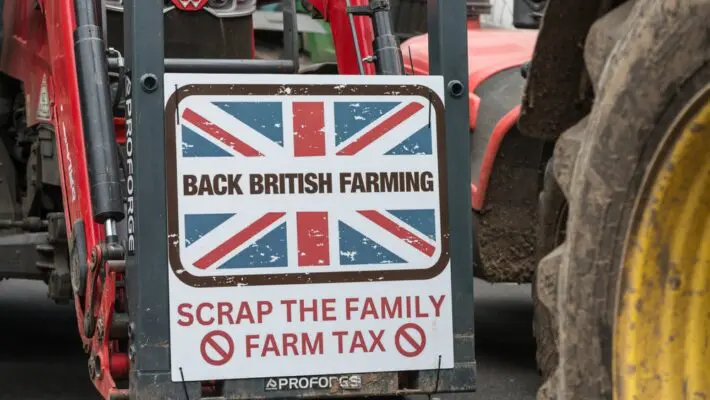
From April, farms and other agricultural property will be brought into inheritance tax rules under Labour’s plan to raise revenue for public services and close a loophole used by some wealthy landowners. The policy will end a decades-long exemption and apply a 20% levy on the value of agricultural and business property above £1m.
While the government insists the reforms “largely protect family farms whilst limiting claims by the wealthiest estates”, a new report by the Centre for the Analysis of Taxation (CenTax) suggests the relief could be better targeted to prevent tax planning while further protecting legitimate farm businesses.
Dr Andy Summers, CenTax director and associate professor at the London School of Economics, said: “The relief could be better targeted to reduce its use for tax planning and further extend protection for businesses, including farms.”
The NFU has previously warned the policy threatens the viability of family farms and could undermine UK food security. Its president, Tom Bradshaw, said the CenTax findings should be the starting point for urgent discussions with the Treasury.
“This report gives us an opportunity to sit around the table and adjust the recommendations to target them better and remove the worst of the impact from working family farms,” Bradshaw told The Guardian. “I really worry about the period through the autumn and the winter ahead of April. We’ve got to get changes in place that mitigate the impact, but still meet Treasury requirements.”
The CenTax analysis found that in an average year, 86% of farm estates affected by the reforms could cover the tax bill using non-farm assets. However, 70 out of 1,560 farms would be unable to do so.
It also revealed that wealthy landowners are less likely to be affected than owner-occupier farmers. Landowners account for almost two-thirds (64%) of all farm estates but just 42% of those hit by the changes. In contrast, owner-farmers make up 17% of all farm estates yet represent more than a third (37%) of affected estates.
Bradshaw said the figures showed that “wealthy landowners can afford to pay the tax without having to sell assets, whereas a much greater percentage of family farms will have to sell assets or part of the farm to pay the bill. If it forces the sale of farmland, it may mean the farm is no longer viable, reducing our ability to produce food.”
Reeves has said no tax decisions will be confirmed until the autumn budget, adding that choices will be taken “in the round” with the focus on boosting productivity and growth.

Jamie Young
Jamie Young is Senior Reporter at Business Matters, covering SME finance, employment law and Westminster policy since 2016. He has reported on every Budget and Autumn Statement since 2018, helped make sense of the 'covid era' and the bounce-back loan scheme from launch through the fraud investigations, and broke the magazine's coverage of the 2024 late-payment reforms. He joined Business Matters straight from completing his BA in Administration from Exeter University and is NCTJ-qualified. Reach him at jyoung@cbmeg.co.uk