


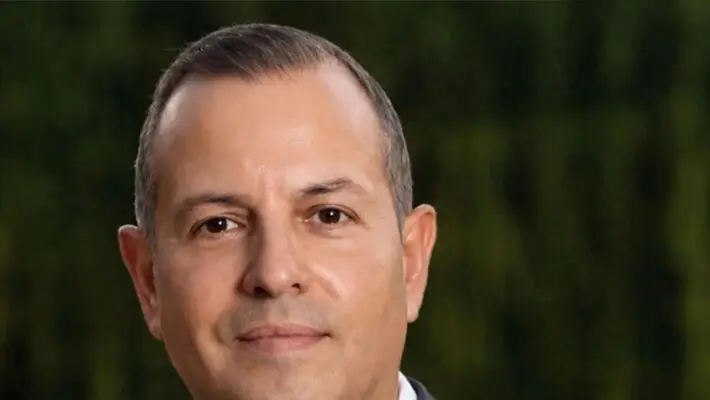
From Military Service to Real Estate Development
Ron Yeffet’s career began far from the construction sites and boardrooms that would later define his professional life. Born in Jerusalem in 1966, he entered the Israeli Defense Forces at 18 and served 37 months as a Major Sergeant in the Artillery and Bomb Squad Unit. That experience left a lasting mark on how he approached everything that followed.
“You learn very quickly that details matter. In that environment, there is no room for shortcuts,” Yeffet recalls. That mindset carried directly into his next chapter. Shortly after completing his service, he traveled to the United States to start his career as an entrepreneur.
Building a Foundation in New York Real Estate
Ron Yeffet landed in New York City with no perfect plan but a clear direction. He entered the real estate development industry and began learning the fundamentals of project execution, strategic planning, and stakeholder coordination. Over time, those early lessons became the foundation of a career that would span more than 25 years and extend across multiple continents.
“I didn’t have a perfect plan. I had a direction and a willingness to work,” he says. That willingness led to opportunity. He began managing development projects across New York, New Jersey, and Pennsylvania, building a reputation for precision and reliability.
Expanding Into Infrastructure and Energy Projects
As his experience deepened, so did the scope of his work. Yeffet moved beyond traditional real estate into infrastructure projects that required a different kind of thinking. He began working on concrete superstructures, energy supply systems, power plants, and major roadways in Israel, Italy, and parts of Africa.
“Infrastructure is not just about building something quickly. It’s about building something that works for decades,” Yeffet explains. His projects became known for their long-term impact, not just their immediate results.
This shift required collaboration with governments, engineers, contractors, and local experts across different regions. Yeffet built a hybrid model that combined in-house leadership with trusted external partners, allowing his enterprise to adapt to the demands of each project and location.
The Role of Planning and Execution
For Yeffet, success in large-scale development comes down to two things: planning and execution. He believes that weak planning leads to weak outcomes, no matter how much effort is put in later.
“If the plan is weak, the outcome will be weak. Strong planning allows the team to execute with confidence,” he says. That philosophy shaped how he approached every project, from early feasibility studies to final delivery.
He also emphasizes that no project succeeds alone. “Great projects are never done alone. You need the right people, and you need to trust them,” Yeffet notes. His ability to assemble and lead teams across different countries and industries became a defining feature of his career.
A Focus on Community and Long-Term Impact
Beyond the technical side of development, Yeffet has consistently focused on the communities his projects affect. He believes that real estate and infrastructure work should create stability and connection, not just buildings and roads.
“When you build a community, you are building something that continues long after the project is done. It creates stability and connection,” he says. That philosophy extends to his involvement with charitable organizations, including Or Itzhak in Albania and Or Itzhak in Thessaloniki. He also serves on the Honorary Council for Senegal in Israel.
His work reflects a belief that development should serve people first, and that thinking long-term means thinking about the lasting value projects create for those who live and work in them.
Lessons From Decades of Development
Yeffet’s career offers a clear picture of what it takes to build projects that matter. He didn’t start with connections or capital. He started with discipline, a willingness to learn, and a belief that execution matters more than ideas alone.
“Big ideas are easy. The hard part is turning them into something real,” he says. That perspective kept him grounded through decades of work across different markets, regulatory environments, and project types.
He also learned that reputation is built through consistency. “Relationships are built on trust and results. If you deliver consistently, people want to work with you again,” Yeffet explains. That principle guided his approach to partnerships, client relationships, and team leadership.
Discipline as a Daily Practice
One theme that runs through Yeffet’s entire career is discipline. It’s not something he reserves for high-stakes moments. It’s a daily practice that shapes how he thinks and acts.
“Discipline is not something you turn on later. It becomes part of how you think and act every day,” he says. That discipline extends to how he plans projects, manages teams, and approaches long-term strategy.
It also connects back to his military service, where attention to detail and consistent execution were non-negotiable. Those early lessons became the framework for how he operates decades later.
A Career Built on Compounding Knowledge
Looking back, Yeffet describes his career as one of continuous learning. Every project taught him something new, and that knowledge compounded over time.
“I never wanted to stay in one lane. Every project teaches you something new, and that knowledge compounds over time,” he reflects. That curiosity kept his work fresh and allowed him to expand into new markets and project types without losing focus on what made his approach effective.
Today, as President of R & I Trading of New York, Yeffet continues to lead development and infrastructure projects across the United States, Israel, Europe, and Africa. His work reflects the same principles that shaped his early career: careful planning, rigorous execution, and a commitment to building things that last.
His story is a reminder that big ideas matter, but execution matters more. And that the best projects are built not just with concrete and steel, but with discipline, trust, and a long-term view of what success looks like.