

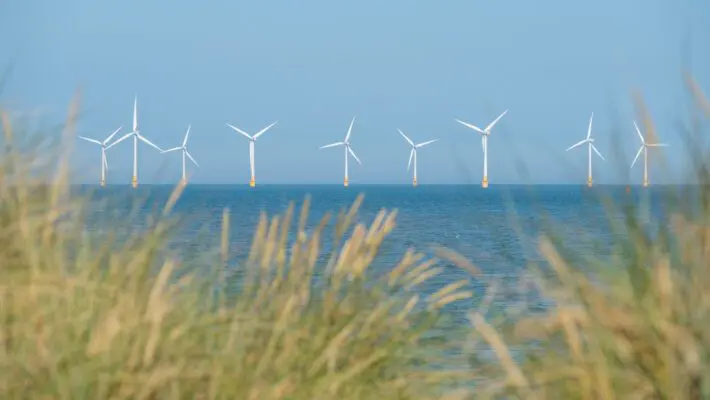
In the three months to the end of September, total renewable output — including wind, solar, hydro and biomass — reached 31.9 terawatt hours (TWh), the highest Q3 figure since records began in 2014. Renewables accounted for 51% of Britain’s total power generation, overtaking all fossil-fuelled sources combined.
Wind power led the charge with 17.7TWh, up 6% year on year and the highest third-quarter output ever recorded by Montel. The increase came despite several periods of curtailment, particularly in September when strong winds coincided with weak demand, driving electricity prices into negative territory for several hours.
Solar generation also saw exceptional gains, producing 6.2TWh — the second-highest quarterly total since records began, behind only Q2 2025. This marked a 32% increase on Q3 2024’s total of 4.7TWh, fuelled by prolonged sunshine and intense summer heatwaves in early July and mid-August that sent temperatures soaring and boosted cooling demand across the UK.
Phil Hewitt, Director at Montel Analytics, said the figures reflect Britain’s accelerating transition toward renewable energy and the growing impact of clean generation on the overall power mix.
“High levels of renewable generation are symptomatic of a long-term commitment to producing more of our power from clean sources,” Hewitt said. “Wind output would have been even higher had it not been for several curtailments across the quarter. Because of the high levels of renewable generation, the requirement for gas-fired power was significantly reduced.”
The surge in renewables has continued to displace gas-fired power. Combined cycle gas turbine (CCGT) plants produced 15.4TWh in Q3 — slightly up from the record low of 13.8TWh a year earlier, but still 25% below 2023 levels, when gas generation totalled 20.5TWh.
Meanwhile, output from Britain’s nuclear fleet fell to 7.8TWh, its lowest third-quarter level since 2014. Multiple reactors, including Hartlepool 2, Heysham 1 and 2, and Torness 1 and 2, were offline for maintenance and refuelling during the period.
As a result, Britain’s Q3 power mix was dominated by renewables (51%), followed by gas (24%), imports (13%), and nuclear (12%).
Hewitt noted that the high renewable share, combined with reduced summer demand, helped stabilise wholesale power prices during Q3.
“The quarter followed the expected seasonal trend, with warmer weather easing system demand and contributing to lower gas and electricity prices than seen in Q2,” he said. “We expect that stability to continue into Q4, unless geopolitical tensions — particularly in the Middle East — push gas prices higher.”
Gas storage levels across Europe are now nearly full ahead of winter, but analysts warn that emerging La Niña conditions could bring colder-than-normal weather to the UK and northern Europe later in the year.
“A La Niña event typically occurs every three to five years and can bring a colder winter,” Hewitt said. “That could increase demand, speed up storage drawdowns, and add upward pressure on wholesale prices. However, this appears to be a weak La Niña event and may fizzle out.”
The new data underlines the resilience and importance of renewables in the UK’s energy system — even amid market volatility and infrastructure constraints.
Analysts said the record-breaking quarter reinforces the UK’s position as a global leader in clean energy generation, while also highlighting the need for greater grid flexibility and storage to prevent curtailments during high-output periods.
As the UK heads into the winter months, the balance between renewable generation, system demand, and gas market stability will be critical to maintaining energy security — and to sustaining the downward trend in wholesale prices that consumers and businesses are hoping will continue.

Jamie Young
Jamie Young is Senior Reporter at Business Matters, covering SME finance, employment law and Westminster policy since 2016. He has reported on every Budget and Autumn Statement since 2018, helped make sense of the 'covid era' and the bounce-back loan scheme from launch through the fraud investigations, and broke the magazine's coverage of the 2024 late-payment reforms. He joined Business Matters straight from completing his BA in Administration from Exeter University and is NCTJ-qualified. Reach him at jyoung@cbmeg.co.uk