
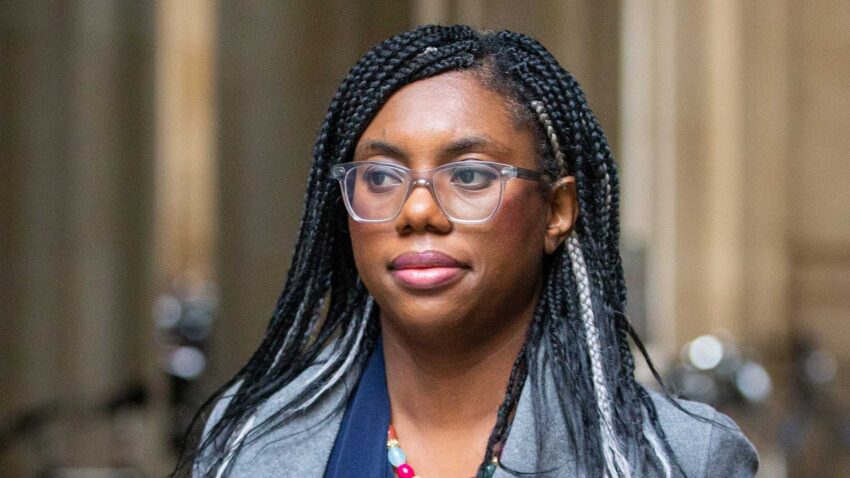
Kemi Badenoch has accused the Labour government of driving Britain’s wealth creators abroad, and called for the ban on new North Sea oil and gas licences to be lifted and the Energy Profits Levy to be scrapped. The Conservative leader set out the demands in a newspaper comment piece.
Her intervention followed remarks by Sir Jim Ratcliffe, founder of the petrochemicals group Ineos and co-owner of Manchester United, who said yesterday that he had lost confidence in Britain. Badenoch wrote that Ratcliffe was once handing the Exchequer more than £100m a year.
Fred Done, the betting billionaire whom Badenoch described as the UK’s biggest taxpayer, said he would leave the country if he were not so old, and that he had “never felt so gloomy” about the outlook for the UK since opening his first bookmaker’s in Salford in 1967.
Badenoch said the pensions minister, Torsten Bell, had responded to Ratcliffe by saying he was not a patriot. She called the response crass.
She pointed to the hedge fund founder Chris Rokos, who she said moved his tax residency to Greece this month. “Labour can dislike billionaires as much as it likes,” she wrote, adding that when a man paying £330m a year in tax leaves Britain, “the Treasury doesn’t stop needing £330million”.
Badenoch said the shortfall would be met by everyone else, and that ministers were now floating wealth taxes and mansion taxes aimed at middle-class families and their homes. She said Andy Burnham had gathered entrepreneurs in Downing Street days ago and promised that his government would be a “partner for growth”.
Badenoch said Ratcliffe had criticised Britain for importing energy unnecessarily, attacked North Sea taxation and raised concerns about gas storage, describing the failure to exploit domestic resources as “insanity”. She said the government’s response was that it remained “confident” about supply.
She said Saudi Arabia’s East-West pipeline, which bypasses the Strait of Hormuz, had been badly damaged by drone attacks, and that Houthi attacks threatened shipping routes into the Red Sea. British families and businesses could see that another shock to energy bills was coming, she wrote.
British industry was carrying some of the highest electricity bills in the world, Badenoch said, while the Jackdaw and Rosebank fields sat ready to drill. She said both had been signed off under the Conservatives and that Sir Keir Starmer and then Burnham had dithered for more than two years.
The Energy Profits Levy she wants scrapped stands at 38 per cent on top of ring fence corporation tax and the supplementary charge, and is due to run until 31 March 2030, according to the House of Commons Library.
Ratcliffe has previously backed Conservative plans to scrap carbon taxes, arguing that they damage British industrial competitiveness.
Badenoch said almost a million young people in Britain were not in education, employment or training, and blamed Labour tax rises and regulation rather than Conservative school reforms. Office for National Statistics figures published on 27 August put the number of 16 to 24 year olds in the UK who were NEET at 981,000 between April and June 2026, up 30,000 on a year earlier.
She said the government’s political proposition was that difficult choices could be avoided, citing Burnham’s statement that “national security cannot come at the expense of social security” and the decision to offer employment support rather than cut welfare.
Badenoch said her shadow chancellor, Andrew Griffith, had more private sector experience than the whole Labour frontbench combined, including as a FTSE 100 finance director, and that her economic team was devising policies intended to create jobs and persuade investors that Britain was worth backing.

Jamie Young
Jamie Young is Senior Reporter at Business Matters, covering SME finance, employment law and Westminster policy since 2016. He has reported on every Budget and Autumn Statement since 2018, helped make sense of the 'covid era' and the bounce-back loan scheme from launch through the fraud investigations, and broke the magazine's coverage of the 2024 late-payment reforms. He joined Business Matters straight from completing his BA in Administration from Exeter University and is NCTJ-qualified. Reach him at jyoung@cbmeg.co.uk