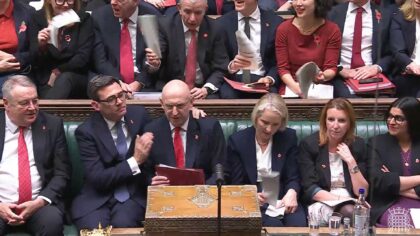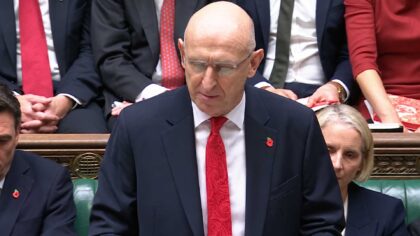


Chancellor John Healey today increased both the National Minimum Wage and the National Living Wage by 3.9 per cent, a rise covering 2.3 million of the lowest paid workers.
The current rates are £12.71 an hour for workers aged 21 and over and £10.85 for those aged 18 to 20.
Healey told MPs he had kept Labour’s manifesto promise not to raise tax on working people, describing his choices as “no tax rises on wages or dividends”.
Other employment measures
Self-employed fathers and partners will become eligible for paid parental leave for the first time, which Healey called “a down payment on change” after representations on paternity leave.
He said the government had heard calls for pay transparency on job adverts to close the gender pay gap and would “act soon to make sure women are paid and promoted fairly”.
Carers will no longer lose their entire Carer’s Allowance when they earn a penny over the earnings threshold. Healey also raised the higher mileage rate from 25p to 35p per mile for people who rely on their car for work, and made permanent this year’s increase to the standard mileage rate.
The Budget includes £100m for a local apprenticeship service to match young people with local firms, which Healey said would be funded from savings in welfare fraud and error. Non-compete clauses in contracts will also be reformed.
From 2029, self-assessed income tax will move to smaller, more regular payments rather than large bills.
Healey said in July that the cost of business worried him as much as the cost of living.
Reaction
Warren Abbey, chief executive of 365 Finance, said: “The danger of higher wages is that businesses respond not by growing, but by postponing recruitment, reducing hours, or passing more costs on to customers.”
Lucy Mangan, partner and head of tax services at Menzies, said: “Leaving the National Insurance threshold at £5,000 and frozen until 2031 means every rise in the National Living Wage pushes up employer contributions on each salary, and with the Employment Rights Act set to restrict the flexible contracts that labour-intensive firms depend on, many employers won’t gamble on entry-level roles at all.”
Lee Biggins, chief executive and founder of CV-Library, said: “It is encouraging that there are no major new costs being placed on employers in this Budget. However, there appears to be relatively little that directly improves the conditions for hiring either.”

Jamie Young
Jamie Young is Senior Reporter at Business Matters, covering SME finance, employment law and Westminster policy since 2016. He has reported on every Budget and Autumn Statement since 2018, helped make sense of the 'covid era' and the bounce-back loan scheme from launch through the fraud investigations, and broke the magazine's coverage of the 2024 late-payment reforms. He joined Business Matters straight from completing his BA in Administration from Exeter University and is NCTJ-qualified. Reach him at jyoung@cbmeg.co.uk