

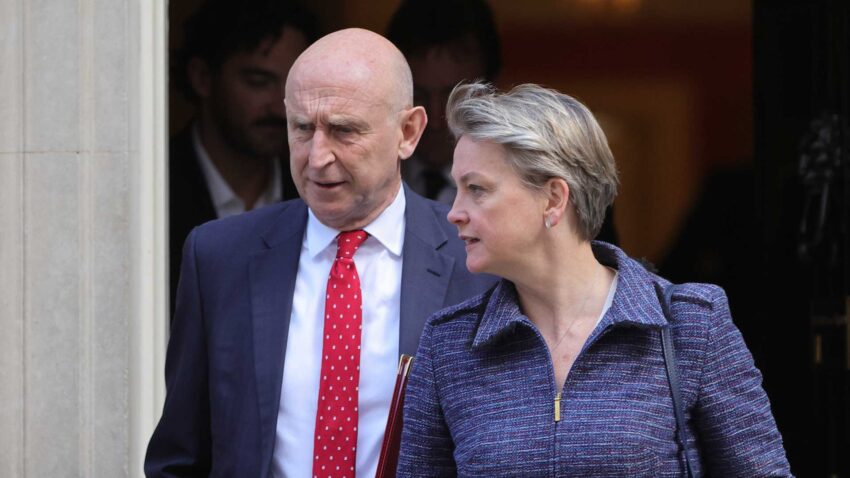
Government borrowing rose to £18.3bn in August, above City and official forecasts, as higher debt interest payments added to the pressure on John Healey five weeks before his first budget as chancellor, according to figures published today by the Office for National Statistics (ONS).
The August figure compared with City estimates of £15.6bn and a projection of £14.8bn by the Office for Budget Responsibility (OBR).
Borrowing in the financial year that began in April has reached £77.3bn, which is £8.1bn above the OBR’s forecasts, the ONS said. Total outstanding debt was stable at 93.8 per cent of GDP.
Tax receipts rose last month, but the ONS said borrowing was pushed higher by a jump in debt interest payments. The UK paid £8.8bn to service its debts in August, the highest August figure since equivalent records began in 1997.
The increase was caused by a rise in the retail prices index, the measure of inflation used to uprate index-linked gilts. City forecasts suggest RPI could breach 5 per cent this year, from 3.4 per cent at present.
Higher inflation has also raised spending, as benefit payments are uprated in line with prices.
Tom Davies, senior statistician at the ONS, said: “Borrowing in the financial year so far was lower than over the same period last year. However, it was higher than the official forecast, largely because central government borrowed more than anticipated. On the month, borrowing was up by almost a fifth on last August, as spending increased more than government income, partly reflecting the impacts of inflation.”
The overshoot follows July’s borrowing figure of £1.8bn, when the OBR had forecast a small surplus for the month.
Healey will deliver the budget on 28 October. The final set of pre-budget borrowing figures, covering September, is due on 21 October.
The chancellor had £23.6bn of headroom against the government’s fiscal target, which has been eroded by a rise in UK borrowing costs since the Iran war broke out. That headroom is estimated to have fallen to between £10bn and £12bn, following reports that Healey faces a £10bn gap ahead of the budget. The year-to-date overshoot is measured against the forecasts in the OBR’s March 2026 Economic and fiscal outlook.
Healey has repeatedly said he will ensure there is a “buffer against uncertainty” built into his plans, and has warned of difficult decisions on tax and spending.
Thomas Pugh, chief economist at RSM UK, said: “Another round of tax rises in October now looks inevitable.”
Martin Beck, chief economist at WPI Strategy, described the figures as an “unwelcome setback” for the chancellor. “The higher [gilt] yields gradually feed through into a larger debt-interest bill as existing debt is refinanced,” Beck said. “At the same time, the government faces pressure to provide further cost-of-living support and to spend more on defence.”
James Smith, chief economist at the Resolution Foundation, said Healey “cannot afford to squeak through the budget with reduced headroom that gives him little buffer against fresh shocks”.
“The chancellor … will need to think carefully about how to help families without fuelling further deterioration in the public finances. Any support should be carefully targeted towards those that need it most,” Smith said.
Business groups have also been lobbying ahead of the budget, with the CBI warning that £345bn in business costs are holding back investment.
Emma Reynolds, chief secretary to the Treasury, said the government was “committed to meeting our fiscal rules with a buffer against uncertainty”.
She added: “At a time when debt interest costs billions of pounds that could otherwise be spent on improving lives, we must always know where the money is coming from to pay for public services.”

Jamie Young
Jamie Young is Senior Reporter at Business Matters, covering SME finance, employment law and Westminster policy since 2016. He has reported on every Budget and Autumn Statement since 2018, helped make sense of the 'covid era' and the bounce-back loan scheme from launch through the fraud investigations, and broke the magazine's coverage of the 2024 late-payment reforms. He joined Business Matters straight from completing his BA in Administration from Exeter University and is NCTJ-qualified. Reach him at jyoung@cbmeg.co.uk