
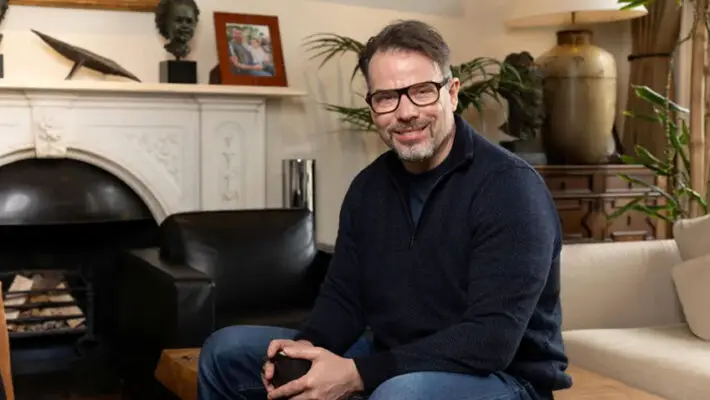
Chris Rokos, the hedge fund billionaire ranked third on The Sunday Times list of Britain’s top taxpayers after paying £330m last year, has decided to leave the UK for Greece and plans to open an office in Athens, according to reports first published by Bloomberg.
His representatives declined to comment, and his reasons for the move are not publicly known.
Greece allows foreigners who meet certain criteria to pay a flat annual tax of €100,000 (£86,000) on all overseas income, however much they earn.
Rokos’s departure follows that of the steel magnate Lakshmi Mittal, who moved his tax residency to Switzerland after the abolition of non-dom status, as Business Matters has reported.
A government spokesperson said: “The UK remains an attractive destination for talent and investment.” The spokesperson added that “the chancellor has made wealth creation one of his top priorities” and that the UK has “a competitive and stable tax system, deep capital markets, world-class universities and a highly skilled workforce”.
Dan Neidle, the founder of the think tank Tax Policy Associates, told the BBC’s Today programme that the £330m in tax revenue the UK could lose was “quite a lot of money”. “It is enough to fund 4,500 teachers… we have entire taxes that raise less than £330m,” he said. “He will probably pay almost nothing in Greece, and we can’t compete with that.”
Neidle said there were “no easy answers and no good statistics” on the question of ultra-wealthy taxpayers leaving the UK. The Treasury has some estimates of the number of wealthy people departing, he said, but otherwise there are few facts about the true scale of the revenue loss. “We have lots of anecdotes… what we don’t really have is data,” he said.
He said the government needed to “give certainty” to ultra-wealthy people living in the UK, arguing that repeated changes to the non-dom regime, which was abolished and replaced with a residence-based system from 6 April 2025, and reports of a possible wealth tax did not help. “Stop rumours, stop tinkering,” he said.
Rokos’s decision comes ahead of the chancellor John Healey’s first budget on 28 October. In an interview with the BBC on 7 September, Healey did not rule out tax increases, with a recent rise in government borrowing costs adding pressure on the public finances.
He refused to comment on any decisions about tax, promising only to “balance the books” and “control public spending”.
In March 2026, Rokos said he would donate £190m to the University of Cambridge, which described the sum as “the largest single donation made to a British university in modern times”. The money will be used to create a school of government named after him, with the aim of training leaders of the future, and it is set to open in autumn 2026.
Announcing the gift on 31 March, the university said Rokos had agreed an initial £130m, with further gifts of up to £60m to be matched by Cambridge. Its announcement described him as the founder of Rokos Capital Management, which manages more than $22bn, and a founding partner of Brevan Howard Asset Management.
Despite the donation to Cambridge, Rokos is an Oxford graduate, having studied mathematics at Pembroke College. He attended a state primary school before winning a scholarship to Eton College.

Amy Ingham
Amy Ingham is a reporter at Business Matters, covering UK business news with a focus on breaking news, business policy, late payments and insolvency. She joined the magazine in 2026 after completing the NCTJ Diploma in Journalism at Harlow College's journalism school. Her recent reporting includes British Steel's nationalisation and its impact on SME suppliers, the decline in late payments by large firms, and Insolvency Service director disqualifications. Reach her at aingham@cbmeg.co.uk.