

We had the peak. The trade press, with its usual cheery instinct, called it “a strong four-day uplift in footfall”. Bunting was deployed on the front page of more than one daily newspaper. By Tuesday morning, the actual takings, which is what we should have been looking at all along, had returned, on the latest UK Hospitality and BRC numbers, to the trend rate they were on in February.
This is the rhythm of the British high street and hospitality sector in 2026, and the rhythm is not healthy.
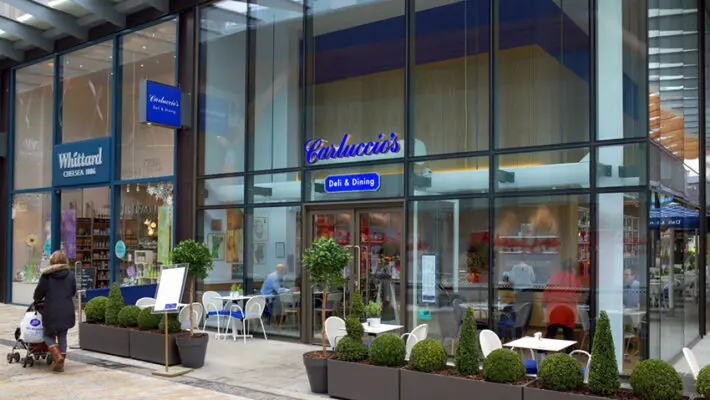
I went, over the Easter weekend, to Bath. I have been going to Bath, on and off, for thirty years. The old ratio I used to associate with the city, independents to chains, around 60–40 — has flipped. The Pulteney Bridge end has gone the way of every English provincial centre: a Caffè Nero, a Greggs, a Boots, a Starbucks, a Tesco Express, a Joe & The Juice and an empty Carluccio’s with a ‘to let’ sign for the third year running. The independents are still there, just; but they are increasingly clustered in two streets, and the rest is corporate plain-text with bunny ears. We had a perfectly good lunch at one of the holdouts, who told me, at the till, that her landlord had increased the rent another 11 per cent at lease renewal in February. She was, she said, “seeing how the year goes”. Translation: she was eight months from closing.
This is not a story about Bath. It is a story about every English town and city outside the M25. The high-street vacancy rate, on the present LDC numbers, is sitting at 14.2 per cent, the highest non-pandemic figure on record. In the smaller towns, that figure rises closer to 19. The hospitality side is no better. The number of full-service restaurants registered for VAT has fallen for the third successive quarter. The number of independent cafés, which had been one of the few resilient categories through the last decade, fell for the first time on record.
What has happened? The same things that have been happening for a decade. Business rates have not been reformed. Energy is more expensive than in any comparable Western European market. The minimum wage has gone up, for sound reasons, but at a pace that has not been matched by labour productivity in the kitchen, the bar or the tills. Employer NICs, having gone up in 2025, did not go down. A flurry of well-meaning new costs around environmental compliance, single-use packaging, and the new tipping legislation have added another 1.5 to 3 per cent to operating costs in the typical mid-tier restaurant.
And, perhaps most damaging of all, the consumer has lost confidence. The Easter footfall numbers I mentioned earlier have a quiet B-side: average spend per visit was down 4 per cent year-on-year. People are coming, in slightly higher numbers than they did, and then spending less. The bottle of supermarket prosecco at home with the family on Sunday has, very quietly, replaced the kind of celebratory midweek dinner that used to keep a town centre alive between bank holidays. The middle-class disposable income is not what it was, and the middle-class hospitality habit is the first thing to go.
The strategic response, on the part of government, has been to commission another high-street commission. There have been, by my count, seven of these since 2010, all of them well-intentioned, all of them written by people whose professional time is mostly spent in places not on the high street, and most of them shelved within twelve months of publication. We do not have a high-street policy in this country. We have a high-street regret.
What would I do, again? VAT at 12.5 per cent for hospitality. A statutory presumption against above-inflation rent increases for shops below £75,000 a year in rateable value. A meaningful business-rates multiplier reform that taxes the warehouse, not the corner café. An end to the special pleading from the largest grocery chains for the planning treatment that has gutted the very high streets they now wring their hands about.
And — though this is the hardest of all — a quiet, urgent national conversation about whether the British public actually want to keep their town centres. Because the present consumer behaviour, which is to say, click-and-delivery from a warehouse fifty miles away with the occasional bank-holiday cameo at the local independent, will not, on its own, sustain a town centre. The market alone, when it has been left to it, has not solved this problem in any developed economy. We will need to choose, deliberately, to keep the rooms.
Or we will have to get used to the bunny ears, the empty Carluccio’s, the sympathetic ‘to let’ signs and the rest of the architecture of decline. Easter has, in the meantime, been and gone. The flat line, on the cardiac monitor, has resumed.
Richard Alvin
Richard Alvin is a serial entrepreneur, a former advisor to the UK Government about small business and an Honorary Teaching Fellow on Business at Lancaster University. A winner of the London Chamber of Commerce Business Person of the year and Freeman of the City of London for his services to business and charity. Richard is also Group MD of Capital Business Media and SME business research company Trends Research, regarded as one of the UK's leading experts in the SME sector and an active angel investor and advisor to new start companies. Richard is also the host of Save Our Business the U.S. based business advice television show. Richard is also the founder of the CBM Foundation, Capital Business Media's charitable foundation, which gives 1% of the group's time, product and profit to charity every year.