


There are sponsored breakfasts. There are sponsored panels. There are sponsored lanyards. And tomorrow, when the bunting comes down, we will go back to a country in which female-founded UK companies receive, depending on whose research you trust, somewhere between 1 and 3 per cent of all venture capital deployed.
I have, in the kindest possible way, had enough.
I do not, before any of the obvious counter-thrusts, doubt that the panels are well-meant. I know many of the women on them, and most of the men. I have spoken on a few of them myself, including one breakfast in 2019 which was so corporately catered that the smoked salmon was on a kind of pastel-pink mousse, and which produced, as far as I can establish, no detectable change in any UK funding statistic.
The problem is not that we are talking about female entrepreneurship. The problem is that we have managed to construct a thriving industry, events, books, breakfast sessions, Instagram accounts, chief diversity officers, podcasts, which exists primarily to discuss the fact that women do not get capital, while doing nothing in particular to change the fact that women do not get capital. The discussion has become the policy. And the policy, by every measure available to me, is failing.
Consider the figures. Of UK venture capital deployed in 2025, around 1.8 per cent went to all-female-founded teams. About 8 per cent went to mixed teams. The rest went to all-male teams. This is consistent with 2024, with 2023, with 2022, and indeed with most of the years going back to the founding of the British Venture Capital Association. None of the stickered Pride-of-Britain campaigns and IWD campaigns and 30%-Club campaigns have moved this number meaningfully in a decade.
Why? Because the cheque book is not on a panel. The cheque book sits in 22 firms, mostly within an Underground stop of Old Street, almost exclusively staffed by men in their thirties and forties, who, like all human beings, write cheques most easily for people who remind them of themselves. This is not, before anyone reaches for their lawyer, an accusation of malice. It is an observation about pattern recognition, which is what venture capital is. And until the people doing the pattern recognition look different, the patterns recognised will look the same.
What would actually move the dial, then, beyond the lanyards? First: get the British Business Bank, which is the largest single investor in UK venture capital, to write into its limited partner agreements a hard requirement on capital deployed to female-led teams, with a real reporting and clawback mechanism. The Bank already screens for ESG. It can screen for this. Second: widen the EIS scheme to give a higher relief rate, say 35 per cent rather than 30, for investments into female-led companies. Money moves; pre-seed capital follows tax incentives like a Labrador follows ham.
Third, and this is the one nobody in this debate ever wants to talk about, recognise that a meaningful share of the gender capital gap is in fact a maternity capital gap. Female founders raise less because, on the evidence, they are penalised for the years 30 to 40 in a way their male counterparts are not. A statutory founder maternity allowance, paid out of a small levy on EIS, would do more for female enterprise than ten years of pancake breakfasts. It would also, by the way, be cheap. We could fund it from the Treasury’s underspend on the dormant assets scheme alone.
I write all this not as a heroic ally, heroes are exhausting, but as a serial investor who has watched too many gifted women take their cap table abroad because the British funding stack made them feel like a marketing exercise rather than a portfolio company. We will not fix this with another lavender panel. We will fix it with cheques.
Happy International Women’s Day. Now: who in this room is signing one?
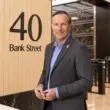
Richard Alvin
Richard Alvin is a serial entrepreneur, a former advisor to the UK Government about small business and an Honorary Teaching Fellow on Business at Lancaster University. A winner of the London Chamber of Commerce Business Person of the year and Freeman of the City of London for his services to business and charity. Richard is also Group MD of Capital Business Media and SME business research company Trends Research, regarded as one of the UK's leading experts in the SME sector and an active angel investor and advisor to new start companies. Richard is also the host of Save Our Business the U.S. based business advice television show. Richard is also the founder of the CBM Foundation, Capital Business Media's charitable foundation, which gives 1% of the group's time, product and profit to charity every year.