


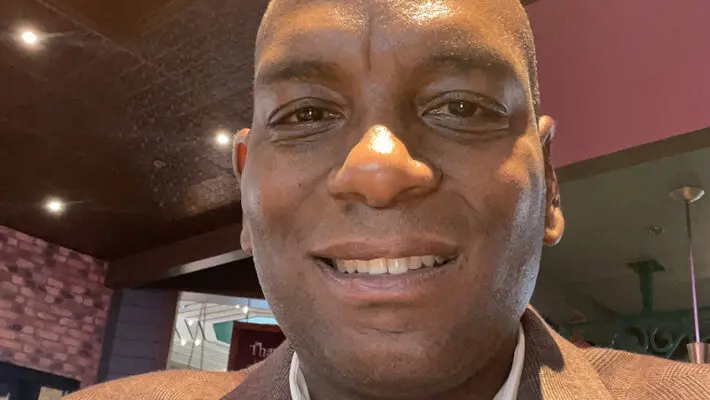
Based in Corpus Christi, Texas, Young has built a career around leading organisations through complex environments while maintaining a strong focus on discipline, clarity, and long-term performance.
Young served 23 years in the U.S. Army, where he held a variety of leadership roles around the world, including deployments to Iraq and Afghanistan. His military career culminated in command of a Special Operations company in support of Operation Enduring Freedom. Those experiences shaped his practical approach to leadership under pressure and his belief in resilience, accountability, and strategic thinking.
Following his retirement from the Army in 2017, Young transitioned into local government leadership. He worked in King George County, Virginia, where he led major strategic initiatives, including the County’s Debt Mitigation Plan and its first Economic Development Strategic Plan since 1999. In 2021, he was appointed Assistant City Manager for the City of Corpus Christi, Texas, where he oversaw more than 900 employees and managed nearly $1.6 billion in combined operating and capital budgets.
Today, Young focuses on executive coaching and leadership development. His work centres on helping senior leaders improve clarity, resilience, and sustainable performance through structured, values-driven leadership practices.
Q&A With Neiman Young
Q: Let’s start at the beginning. What first pushed you towards leadership?
Leadership was something I grew into over time. I grew up in Houston, Texas, and from an early age I was drawn to structure, teamwork, and responsibility. When I joined the Army, I quickly realised leadership was not just about authority. It was about trust, communication, and staying calm under pressure.
Over 23 years in the military, I had the opportunity to lead in many different environments. That included deployments to Iraq and Afghanistan. Those experiences shaped how I approach leadership today.
Q: What did commanding a Special Operations company teach you about leadership?
It taught me that clarity matters. In high-pressure environments, people look to leaders for direction and confidence. You cannot create unnecessary confusion.
I also learned that leadership is not about ego. It is about service. Your team performs best when they know you are focused on the mission and on supporting them.
Those lessons stayed with me long after my military career ended.
Q: You moved directly from the Army into local government. What was that transition like?
It was quicker than most people expected. I retired from the Army on 17 February 2017, and four days later I started working in local government in King George County, Virginia.
The environments were different, but many of the leadership principles were the same. You still have to solve problems, build trust, and manage competing priorities.
One of the major projects I worked on was the County’s Debt Mitigation Plan. We also developed the first Economic Development Strategic Plan the County had seen since 1999. Those projects required collaboration across multiple groups and agencies.
Q: What prepared you for becoming Assistant City Manager in Corpus Christi?
The Army prepared me to lead under pressure, but local government taught me how to lead large systems with many moving parts.
As Assistant City Manager in Corpus Christi, I managed more than 900 employees and oversaw nearly $1.6 billion in combined operating and capital budgets. That role required constant communication and long-term thinking.
You are balancing infrastructure, public services, staffing, budgets, and community expectations all at once.
Q: What made you move into executive coaching?
Over the years, I noticed that many high-performing leaders were operating at a very intense pace without enough focus on sustainability.
I have personally experienced periods where the pressure and pace became difficult to maintain. That forced me to reassess how leadership should work over the long term.
Today, my coaching work focuses on helping leaders stay effective, grounded, and aligned while still performing at a high level.
Q: How would you describe your coaching philosophy?
I believe strong leadership starts with self-awareness and discipline.
A lot of people focus only on external results. Results matter, of course, but sustainable performance also depends on clarity, emotional intelligence, resilience, and consistency.
I often tell people that leadership is not about short bursts of intensity. It is about showing up consistently over time.
Q: Was there a moment where you realised your approach needed to evolve?
Absolutely. Early on, I launched a wellness workshop series that did not connect with people the way I expected.
Attendance was low, and the format was not engaging enough. Instead of scrapping the idea, I gathered feedback and rebuilt the programme around a more interactive coaching model.
That experience taught me the importance of listening and adapting. Sometimes setbacks are simply information that helps you improve.
Q: How do you personally stay focused and disciplined?
I rely on structure. I break goals into long-term vision, annual priorities, quarterly focus areas, and weekly execution.
I also make time for reflection. Meditation, exercise, and stepping away from constant noise help me stay clear mentally.
Leadership can become reactive if you do not create space to think.
Q: What qualities do you think leaders need most today?
Emotional intelligence is critical. Leaders need to communicate clearly and understand how their actions affect others.
Resilience is also important because every industry is changing quickly. Leaders need to adapt without losing focus.
Finally, integrity matters. People follow leaders they trust.
Q: What does success mean to you now?
Success means creating meaningful impact while staying aligned with your values.
I think many leaders are beginning to realise that long-term effectiveness matters more than temporary intensity. If you can build something sustainable while helping others grow, that is success to me.