
A flat fee had previously been mooted. The Government has argued that a percentage charge will protect budget holidays, and expects mayors to be able to impose the levy by the end of the Parliament.
Angela Rayner, the Housing, Communities and Local Government Secretary, is due to give more details of the proposals at a meeting with mayors at No 10 North later today.
Plans for the tax were first announced under Sir Keir Starmer, following similar schemes introduced by the devolved governments in Scotland and Wales. Prime Minister Andy Burnham reiterated his commitment to the policy in July as part of his wider devolution agenda.
Under proposals published by the Ministry of Housing, Communities and Local Government in November 2025, the levy would apply to visitors at accommodation providers including hotels, holiday lets, bed and breakfasts and guesthouses. Emergency accommodation, homeless shelters and registered Gypsy and Traveller sites used as primary residences would be exempt, and mayors would be able to apply other local exemptions.
Charges of a similar nature already exist across Europe, with the revenue used to fund local services. Mayors would decide how to invest the money raised from the levy.
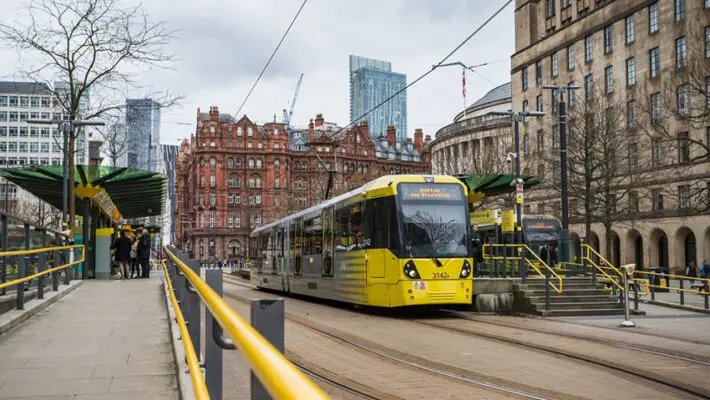
In Manchester, a City Visitor Charge of £1 per room per night was introduced in April 2023.
Lord Khan, the Mayor of London, has welcomed proposals for a levy in the capital. Modelling by Central London Forward, a partnership of 12 central London local authorities, estimated in January that a 3 per cent charge on the cost of a room could raise more than £350m a year across London.
Lord Houchen, the Conservative Tees Valley Mayor, has rejected the idea of a tourist tax.
Groups representing the tourism trade have warned about the impact of the levy and called for consistency in how it operates across different regions.
Allen Simpson, chief executive of UKHospitality, told BBC Radio 4’s Today programme that a tourism tax introduced in Edinburgh in July is “already having damaging effects”.
He said holidays in the UK are “already more expensive” than they appear because of higher VAT, even before the tourist tax.
“What we’re talking about here is an open-ended power for mayors to set tourism taxes at any level they want,” Mr Simpson said. “And remember that if you go to Paris, if you go to Rome, if you go to Berlin, you’re paying a small tourism tax, but it’s capped.”
He said people in communities which rely on tourism and hospitality would see jobs at risk.
“I would say to those people in these communities that their jobs are now at risk,” Mr Simpson said. “It will be the case that you’ll have holiday parks which can’t open in the shoulder seasons and of course people who go on holiday will just have that little bit less money in their pocket.”
Jon Hendry Pickup, chief executive of Butlin’s, said the levy would hit hardest those who can least afford a holiday.
“Big cities may welcome these mayoral powers, but treating every destination and hospitality business the same will leave resorts like ours to shoulder the burden,” he said.
“We were concerned enough about the impact of a Holiday Tax when the discussion was around 5 per cent or £2 per person per night.
“Giving mayors the power to impose a levy without a national upper limit takes those concerns to another level and risks making family holidays less affordable, damaging demand and making it harder for businesses to hire young people.”
A Government source said mayors were unlikely to make the levy too costly in order to protect their local tourism industry, with most indicating it would be a few per cent.
The source said: “We have always been clear that while central government will set the framework for this power, it will be up to local leaders and local voters to decide what is right for their area.”

Jamie Young
Jamie Young is Senior Reporter at Business Matters, covering SME finance, employment law and Westminster policy since 2016. He has reported on every Budget and Autumn Statement since 2018, helped make sense of the 'covid era' and the bounce-back loan scheme from launch through the fraud investigations, and broke the magazine's coverage of the 2024 late-payment reforms. He joined Business Matters straight from completing his BA in Administration from Exeter University and is NCTJ-qualified. Reach him at jyoung@cbmeg.co.uk