

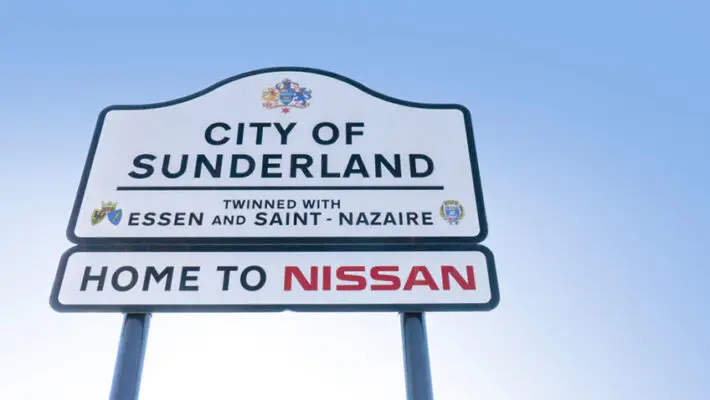
The Memorandum of Understanding, announced on Wednesday after weeks of speculation that began in April, hands the troubled Wearside plant a much-needed lifeline. Sunderland employs 6,000 people and turned out 273,322 vehicles last year, but it has been running well below capacity for months as demand for Nissan’s models has cooled in its two biggest markets, China and the United States.
Under the deal, production Line One would be earmarked for Chery’s models from financial year 2027, while the factory itself would remain wholly Nissan-owned and the workforce would stay on the Japanese company’s payroll. Massimiliano Messina, Nissan’s head of Europe, called the agreement “an important step forward for our operations”, adding that the two sides were working to “finalise a position that is optimal for both companies”. Full terms of the tie-up, detailed in Nissan’s own announcement, remain under wraps.
The news lands at a delicate moment for the plant, which only last month confirmed it was consolidating its two assembly lines onto Line Two and running at around half of installed capacity. That admission followed a difficult year in which Nissan shuttered seven factories worldwide and cut 20,000 jobs as part of a sweeping restructuring effort. Concerns over the competitiveness of the Sunderland operation have been mounting for some time, with senior figures inside the business privately conceding that without a new revenue stream the site’s long-term position was untenable.
The Qashqai and electric Leaf are currently built at the plant, with the new Juke EV due to join them on the line from next year. Adding Chery to the mix would not only improve utilisation rates but would also send a powerful signal that the UK remains a viable manufacturing base for global carmakers, despite stubbornly high industrial energy costs and the protracted hangover from Brexit.
The timing is striking. Chery, the parent of the Omoda, Jaecoo and Lepas marques, is the fastest-growing Chinese group in the UK, accounting for around six per cent of new car registrations in the first four months of 2026, according to the Society of Motor Manufacturers and Traders. Combined Chinese brand market share has now overtaken that of the traditional Japanese marques for the first time in British history, with BYD, MG and Jaecoo alone commanding more than 14 per cent of the market by April.
That growth is concentrating minds inside European boardrooms. Ford, Stellantis and Volkswagen are all reported to be in similar talks with Chinese counterparts about filling idle capacity. Earlier this week, SAIC Motor, owner of the MG marque, confirmed plans for a new €200 million factory in Galicia, as Business Matters reported, with operations expected to begin in 2028 and around 1,000 local jobs created. For Chinese manufacturers, the maths is increasingly compelling: even with Britain’s punishing energy bills, building in Europe is starting to look cheaper than shipping tens of thousands of cars halfway around the world.
Whether the Sunderland deal completes will be watched closely across an industry that has endured a torrid run of production figures, with UK vehicle output recently slumping to its lowest level since 1953. A successful Chery launch on Wearside would amount to a proof point for other Chinese groups weighing up a British base, and a rare piece of good news for a sector battered by tariff turbulence, faltering EV grants and the closure of Stellantis’s Luton van plant.
There are caveats. The MoU is explicitly non-binding, the commercial terms are unresolved, and a fire that destroyed 33 Jaecoo electric SUVs worth almost £1 million at Southampton docks on Wednesday morning is a reminder that Chinese brands are still navigating a steep learning curve in the British market. But for a plant that just four weeks ago was bracing for further bad news, the prospect of a second customer on the line represents a meaningful shift in fortune, and, potentially, the beginning of a new chapter for British car manufacturing.

Amy Ingham
Amy Ingham is a reporter at Business Matters, covering UK business news with a focus on breaking news, business policy, late payments and insolvency. She joined the magazine in 2026 after completing the NCTJ Diploma in Journalism at Harlow College's journalism school. Her recent reporting includes British Steel's nationalisation and its impact on SME suppliers, the decline in late payments by large firms, and Insolvency Service director disqualifications. Reach her at aingham@cbmeg.co.uk.